Pickleball Is the Fastest Growing Sport in America and Its Merch Game Is Just Getting Started


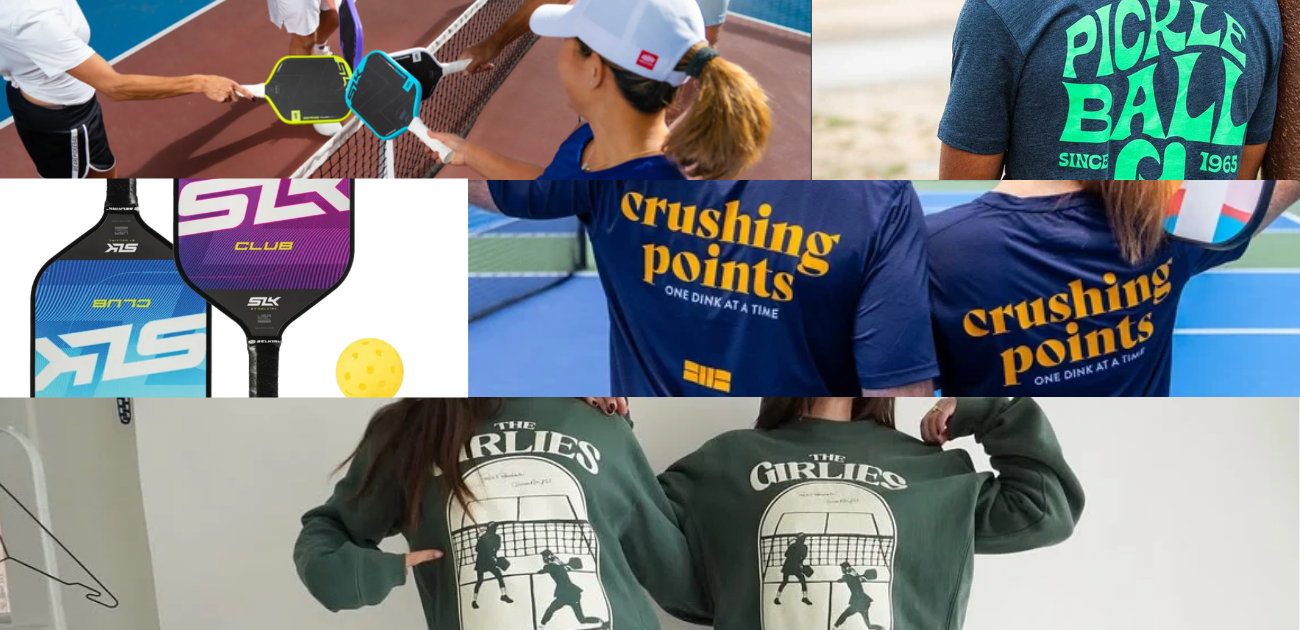
Selkirk sells paddles. What it actually built was a lifestyle brand that people wear to brunch.
Walk into any Life Time facility on a Saturday morning and count the branded shirts on the courts. Half of them came from a club that ordered 300 pieces from a supplier they found on the second page of Google. The other half came from nowhere at all because the club never got around to it. That second group is leaving money and loyalty on the table every single weekend.
Pickleball added millions of American players in the last few years and it did it without ever developing a jersey culture. Basketball has one. Soccer has one. Running has one so strong that people wear race shirts from events they finished a decade ago. Pickleball skipped that step entirely and went straight to mass participation. The gap is wide open and the fall tournament season is when it closes.
Outdoor play peaks in September and October across most of the country. Regional tournaments stack up. Indoor facilities run their fall league signups. Clubs collect dues for the winter season. Every one of those moments puts a captive audience in front of a checkout screen or a front desk.
The organizations that order in July and August have merch on the rack when that traffic arrives. The ones that wait until the first tournament is on the calendar are ordering in a rush window where every decorator in the country is already backed up with holiday work.
This is the volume driver. Players want something they can compete in. That means polyester or a poly blend with real moisture management rather than a heavy cotton tee that turns into a wet towel by the second match. Look at pieces in the 3.8 to 4.5 ounce range. Sublimation and screen printing both work here depending on how much color the design carries.
Caps and visors move faster at outdoor events than anything else on the table. A Richardson 112 trucker with an embroidered left front logo is the default for a reason. It photographs well it fits everyone and the embroidery cost per unit drops fast past 144 pieces.
Morning matches in October are cold. Quarter zips crewnecks and lightweight hoodies sell at three to four times the price of a tee and they carry the highest margin on the whole table. Most clubs underestimate demand here and sell out by noon.
Accessories are the quiet winner. They cost less to produce than apparel they never have a sizing problem and they sit in a player bag for years as a rolling advertisement.
Here is where most clubs get talked into a bad decision. A supplier quotes a low unit price and the club says yes without asking what changes at the next volume break.
On a 500 piece screen printed tee order with a one color front logo the blank is usually the biggest line item. A Bella+Canvas 3001 lands in the four to six dollar range at wholesale. A Comfort Colors 1717 with the heavier hand feel runs eight to eleven. Screen setup is typically twenty to forty dollars per screen per color and that is a one time charge that gets spread across the run. At 500 pieces a single setup fee adds under a dime per shirt. At 50 pieces the same fee adds nearly a dollar.
That is the entire argument for volume. The setup cost does not change. The number of shirts absorbing it does.
Embroidery works differently. Digitizing your logo is a one time charge in the forty to ninety dollar range depending on complexity. After that you pay by stitch count. A clean left chest mark under 8000 stitches typically runs under two dollars per piece at meaningful volume. A dense full back design can triple that. Simplifying a logo for embroidery is one of the fastest ways to cut cost without cutting quality.
The optimization play is not finding a cheaper shirt. It is consolidating your orders. A club running four separate 150 piece orders across a season pays four setup charges and four freight bills. The same club placing one 600 piece order with staggered release dates pays one of each.
Clubs and facilities are the obvious buyers. The less obvious ones are moving faster.
Corporate wellness teams are ordering branded apparel for company leagues because pickleball is the rare activity where a twenty six year old engineer and a fifty four year old VP can play the same match. Brand agencies are building pickleball activations for clients who want a physical touchpoint that is not another booth. PR teams are seeding paddle covers and caps to lifestyle press because the category is still novel enough to earn coverage.
Podcasters in the sports and wellness space are running pickleball merch as a first product because the audience overlap is nearly perfect. Coffee shops near courts are printing shirts with a local joke on them. None of these buyers are ordering ten thousand pieces on day one. They are ordering 200 to 500 and scaling from there.
Most screen printing programs start around 24 to 48 pieces per design per color. Embroidery minimums are often lower because there are no screens to burn. If a supplier tells you the minimum is 500 they are describing their preference and not the technical requirement.
Standard production runs 10 to 15 business days after art approval plus blank sourcing and freight. Build in four to six weeks of buffer for a fall event. Order in July if the tournament is in September.
Sublimation is better for full coverage designs on light polyester and it will not crack. Screen printing with the right ink system works well for simpler marks and is more economical at moderate volume. The fabric decides more than the design does.
Yes and it should. Running one production order with split shipping to multiple facilities is almost always cheaper than separate orders because setup and freight consolidate.
Diskko produces custom pickleball apparel in bulk for clubs leagues tournaments and sponsors across the United States with screen printing embroidery and sublimation handled under one roof alongside finishing kitting and fulfillment. Whether the order is 100 performance polos for a single facility or tens of thousands of pieces across a national league Diskko builds the production plan around your volume breaks and your event calendar so you pay for optimized manufacturing rather than rush fees.